92.5 km
The full circular challenge distance around Olympus.
A circular 92.5 km Olympus route with 7,650 m of positive elevation, long multi-day pacing, and several sections that deserve real caution.
Most of the route follows accessible, well-marked mountain paths and can feel moderate in isolation. The full loop is harder because the days accumulate, the backpack matters, and the second half depends on emergency shelters where food, water, and supplies are the hiker's responsibility.
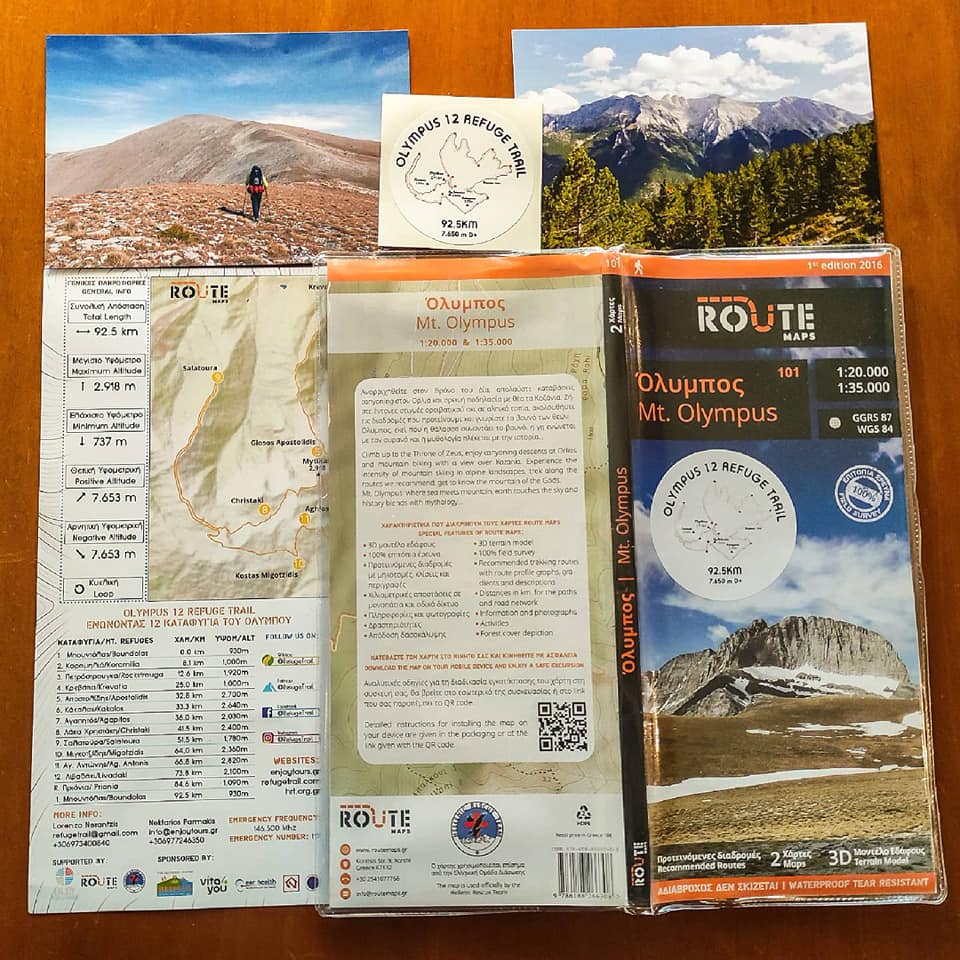
The official route line has not been published yet. The planner and map remain available for private route drafting.
The challenge loop is 92.5 km with 7,650 m of positive elevation. Emergency communication coverage is planned around the Hellenic Rescue Team radio network on 146.500 MHz; the official downloadable route line will appear here once the final file is published.
The three sections that need the most attention are Barbalas Ridge, Kofto toward Refuge A / Agapitos, and the route between Kitros, Nana, and Flambouro. Beginners should use a mountain guide on exposed or poorly marked sections; experienced hikers still need supply support for the emergency-shelter half of the route.
Keep the map, water, and snacks reachable without removing the pack. Use trekking poles on descents, a waterproof shell for sudden storms, warm insulation for evenings and stops, a liner or foil blanket for emergency-shelter beds, dry bags for clothes and sleeping bag, tested boots, spare socks, and a sleeping bag suitable for cold nights even in summer.
Start with enough water, a charged radio or phone plan, and a powerbank. Olympus has fast microclimate changes, cold nights even in summer, and long stretches where mobile signal cannot be trusted. Keep the pack below roughly 15-18 kg, test equipment before the route, and leave shelters cleaner than you found them.
One passport, twelve shelters, twelve stamps, and no time limit: complete Olympus in the way your mountain experience allows.
RefugesOlympus has fourteen shelters in total: eight organised refuges with summer services and six emergency shelters for prepared mountain users.
ToursFour support levels for different hikers: Self-Guided Plus, Semi-Guided, Fully Guided, and All Inclusive.
StoriesProject origin, rescue-team purpose, first challengers, interviews, and practical trail lessons.
TrailTwelve practical rules for walking Olympus well: shared dorms, limited water, no showers, pack weight, weather, food, and Leave No Trace.
About / InfoGreece's highest mountain: 55 peaks above 2,000 m, ravines, forests, streams, myth, and the 2,917 m summit of Mytikas.